Which kind of data is best?
Japan does have free Wi-Fi in shops and stations, but most of it needs registration and the signal is patchy On the move, with maps to open, train times to check or a taxi to call, having your own data is well worth it
| Option | Approximate price | Pros | Watch out | Best for |
|---|---|---|---|---|
| eSIM | ฿30–70 /day 5–8 day packs run to a few hundred baht |
Buy online, install yourself in 5 minutes, keep your Thai number for SMS at the same time | Phone must support eSIM and be network-unlocked | Solo or pairs · short to mid-length trips |
| Physical SIM | ฿300–700 /trip | Works with any phone, buy in Thailand or from a vending machine at a Japanese airport | You must remove your Thai SIM, so you may miss calls and bank SMS · tiny SIMs are easy to lose | Phones without eSIM support |
| Pocket WiFi | ฿150–300 /day | Shares with 5–10 devices, cheapest per head when split across a group | One more thing to carry and charge, must be returned on time, and the group cannot split up | Families or groups of 3+ who stay together |
| Thai carrier roaming | ฿250–450 /day | Works instantly, keeps your own number, nothing to set up | Priciest per day, and some packs cap full-speed data | 1–3 day trips, or last-minute travel with no time to prepare |
Where to buy
In Thailand there are plenty of sellers: online shops, airport counters and travel platforms The advantage of buying through a platform is that youpay in baht, see real reviews, and can cancel under the stated terms Always compare the price against the full-speed data allowance before you buy
 Japan eSIM ↗
Buy online, get the QR code by email instantly, install before you fly. Choose from 3–15 days
Pocket WiFi ↗
Pick up and return at a Japanese airport, share with several devices, good value for groups of 3 or more
Physical SIM ↗
For phones without eSIM support. Collect at the airport or have it delivered in Thailand before you fly
Links in this box are affiliate links — if you book through them we may earn a small commission at no extra cost to you and it does not affect what we recommend
Where to buy travel insurance
Travel insurance for Japan can be bought direct from Thai insurers or through a comparison broker The key point is tolook at the medical expenses limit first not the premium, and to check that it covers flight delays and the activities you will actually be doing — the details worth checking are in the next section
Install your eSIM at the right moment
- Check that your phone supports it — dial *#06# if you see a line reading EID it supports eSIM; the phone must also be network-unlocked
- Buy and install while still in Thailand — do it on home Wi-Fi, scan the QR code the seller sends, and name the eSIM “Japan” to avoid confusion
- Do not activate it yet — leave this line switched off, and set your Thai number as the primary line for calls and SMS
- Switch over once you land in Japan — turn the eSIM line on and set it as your “mobile data” line, andturn off data roaming on your Thai number so you are not billed twice for data
- You still get bank SMS — because your Thai number stays connected (receiving SMS while roaming is usually free, but check with your carrier)
Travel insurance — why it is better value than you think
Japan does not require Thai visitors to hold insurance to enter, but foreigners pay 100% of medical costs with no access to Japanese health insurance. Typical figures:
| Situation | Approximate cost |
|---|---|
| Emergency room visit + medicine (cold or upset stomach) | ฿3,000–8,000 |
| One night in hospital | ฿7,000–15,000 |
| Appendix surgery + recovery | ฿125,000–200,000 |
| Broken bone from a snow or ski fall + surgery | ฿150,000–400,000 |
| Travel insurance premium, 5–7 days | ฿300–900 /person |
The coverage you should have as a minimum
- Medical expenses of THB 2–5 million — do not take the cheapest plan with a six-figure limit; real surgery cases blow past it easily
- Emergency medical evacuation to Thailand — this runs into the millions if you ever need it
- Flight delay or cancellation — crucial in Sep, when typhoons are frequent, or in winter when snow is heavy
- Delayed or lost luggage — compensation for essentials while you wait
- Third-party liability — for accidentally damaging goods in a shop, which Japan takes seriously
Watch out when choosing a plan
- Pre-existing conditions are usually not covered automatically; you must declare them and may need to buy extra coverage
- Risky activities such as skiing, snowboarding, diving and climbing — check whether the plan covers them; snow trips especially
- Must be bought before you depart Policies bought after you have left Thailand mostly do not apply
- Keep every receipt and medical certificate Originals only, or you cannot claim
- Some credit cards include travel insurance, but you mustbuy the tickets with that card and the limits are often lower than you would expect
Frequently asked questions
Does my phone support eSIM, and how do I check?
When should I install my eSIM — before flying or after landing?
Do I need travel insurance for just a few days?
Pocket WiFi or eSIM — which is better?
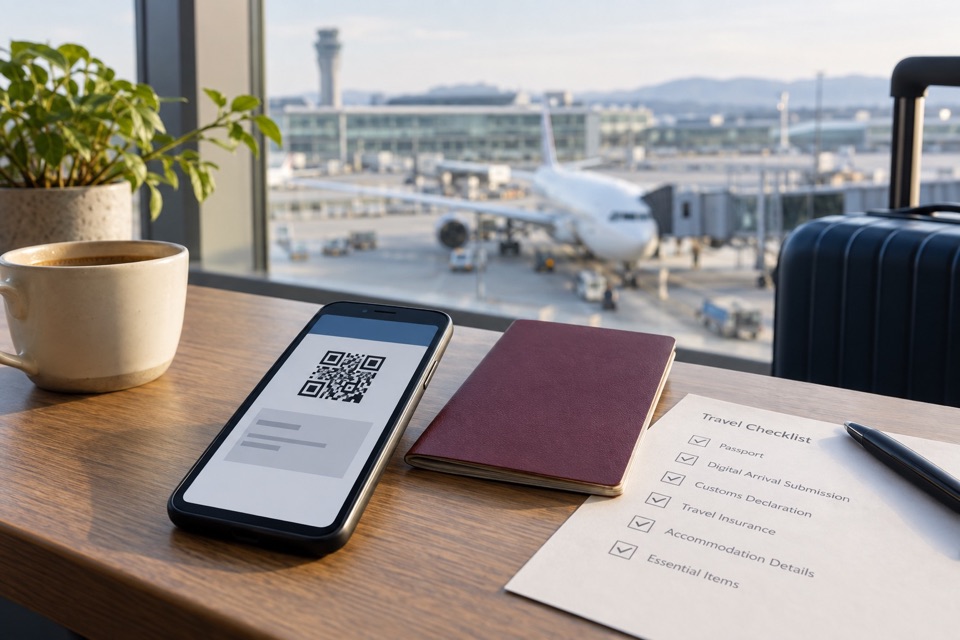 Japan entry documents
Visit Japan Web, one QR code + banned items
 Trip budget calculator
SIM and insurance costs are already in the total
 Etiquette · plugs · money
Small things that make a trip run far more smoothly
Check the latest information 17 Aug 2026 · All prices areapproximate ranges for comparison not guaranteed prices. Please check actual prices with the provider before buying. · Medical costs reflect ranges commonly seen in foreign tourist cases in Japan; actual costs depend on the hospital and the condition